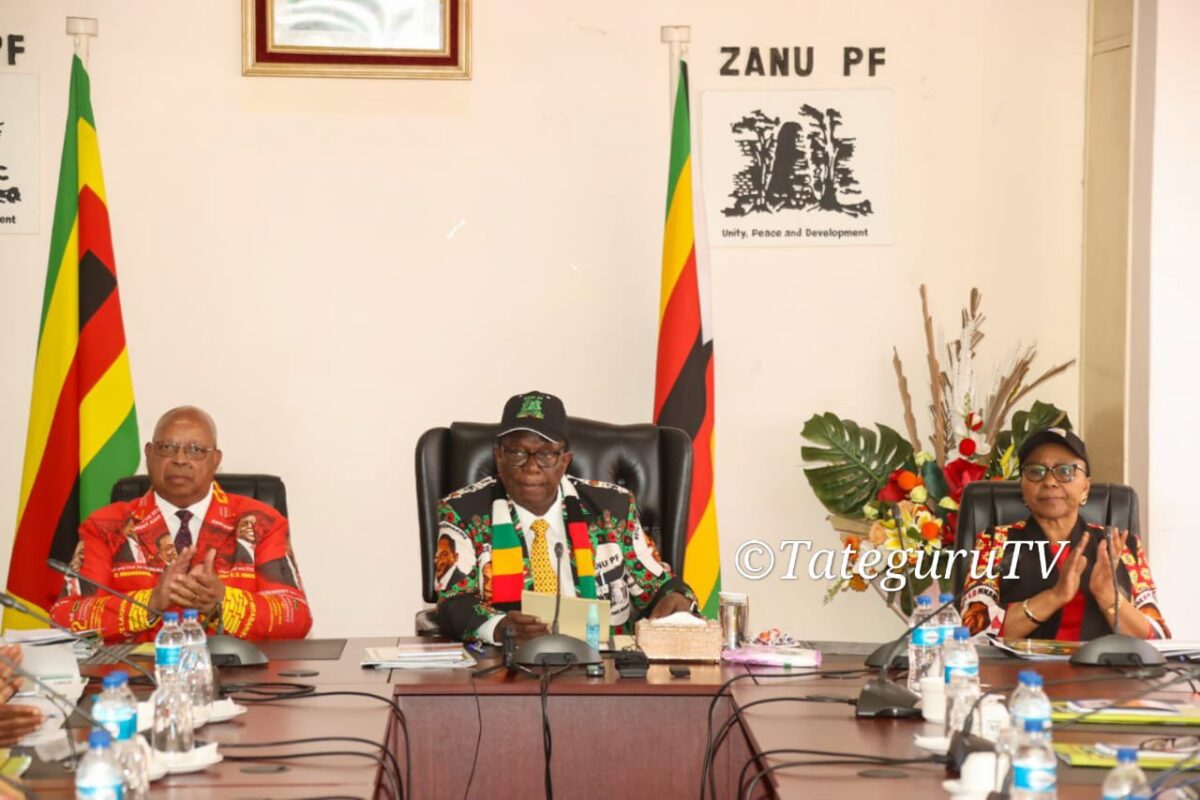
A potentially explosive ZANU-PF politburo meeting proceeded in Harare on Wednesday without Vice-Presidents Constantino Chiwenga and Kembo Mohadi, as the ruling party prepared for a decisive parliamentary vote on controversial constitutional amendments that could extend President Emmerson Mnangagwa's stay in power.
The meeting was the last politburo session before parliament considers the Constitution of Zimbabwe Amendment (No. 3) Bill, legislation that critics say represents the most significant challenge yet to the country's post-2013 constitutional order.
Mnangagwa attended the meeting flanked by ZANU PF secretary Jacob Mudenda and party chairperson Oppah Muchinguri, positions typically occupied by the two vice-presidents.
Presidential spokesperson George Charamba said Chiwenga and Mohadi were "on government assignments" but did not provide further details.
The absence of the two deputies immediately fuelled speculation about growing divisions within the ruling party over the proposed constitutional changes.
Chiwenga is widely reported to oppose the amendments, while Mohadi is said to have remained publicly non-committal.
In remarks made while journalists were present, Mnangagwa avoided direct reference to the controversial constitutional push.
The proposed Constitutional Amendment Bill No. 3, gazetted in February, seeks to extend presidential and parliamentary terms from five to seven years, remove direct presidential elections in favour of election by a joint sitting of parliament, and expand the Senate from 80 to 90 members through presidential appointments.
Critics argue the transitional clauses are specifically designed to allow Mnangagwa to remain in office until 2030, beyond the expiration of his constitutionally final term in 2028.
The bill also proposes abolishing the Zimbabwe Gender Commission and the National Peace and Reconciliation Commission, transferring their functions to the Zimbabwe Human Rights Commission.
Additionally, responsibility for maintaining the voters' roll would be removed from the Zimbabwe Electoral Commission and transferred to the Registrar-General's Office.
Government officials have defended the amendments as reforms intended to strengthen political stability and ensure continuity of development programmes.
Opposition parties, civil society organisations and constitutional experts, however, argue that such far-reaching changes require a national referendum rather than parliamentary approval alone. Critics also condemned the public consultation process, saying hearings were rushed, limited and inaccessible to many citizens.
Despite the controversy, the bill is widely expected to pass due to ZANU PF's overwhelming parliamentary majority.
The constitutional debate has also attracted regional attention following Mnangagwa's recent meeting with South African President Cyril Ramaphosa at Mnangagwa's Pricabe Farm near Kwekwe.
The informal gathering sparked criticism after controversial businessmen Wicknell Chivayo and Kudakwashe Tagwirei were seen accompanying the two leaders, while Chiwenga and Mohadi were absent.
South Africa's presidency later acknowledged concerns that Ramaphosa had travelled alongside "a person of interest" to South African law enforcement, widely understood to refer to Chivayo, who is reportedly under investigation over alleged money laundering linked to Zimbabwe's 2023 election procurement.
Tagwirei, a businessman under United States and United Kingdom sanctions, has also increasingly been linked to succession speculation within ZANU PF.
Political tensions within the ruling party have intensified amid reports of growing rivalry between factions aligned to Chiwenga and those associated with Mnangagwa's business allies.
Unconfirmed reports circulating in political circles further allege that Ramaphosa privately urged Mnangagwa to abandon the constitutional amendments in exchange for political guarantees regarding his eventual transition from office. Neither presidency has commented publicly on the claims.
- zimlive
 Hwange industrial project boosts power
  Ramaphosa disowns 'shady' Chivayo
  Trump admin launches $166B tariff refund portal
  Gold-backed ETF set for VFEX debut
  EU seeks deeper economic ties with Zimbabwe
  Fidelity moves to formalise small-scale gold miners
  Young Investment Professional (YIP) Graduate Programme 2019
 Young Investment Professional (YIP) Graduate Programme 2019

Editor's Pick